






Monday, September 7, 2026
IBCC
No Result
View All Result
  • Events Calendar for 2026
  • About Us
    The Institute for Buddhist Counseling & Chaplaincy (IBCC)

    The Institute for Buddhist Counseling & Chaplaincy (IBCC)

    Background

    Background

  • Project Sites
    • All
    • South Asia
    • Southeast Asia
    • Trans Regional
    Exploring Body, Speech, and Mind: Buddhist Approaches to Contemporary Well-being

    Exploring Body, Speech, and Mind: Buddhist Approaches to Contemporary Well-being

    “No Birth No Death”: A Workshop on Facing Death, Suicide Prevention, and Buddhist Counseling

    Inner Development for the Founders of Outer Development: Buddhist Chaplaincy Training @ the Sarvodoya Movement

    Inner Development for the Founders of Outer Development: Buddhist Chaplaincy Training @ the Sarvodoya Movement

    Rebuilding Trust & Rebuilding Connection while Rebuilding from the Northern Myanmar Earthquake

    Laughing and Crying while Facing Death

    Laughing and Crying while Facing Death

    Trans-Regional

    Trans-Regional

    South Asia

    South Asia

    Southeast Asia

    Southeast Asia

    Public Symposium: Overcoming Contradictions in Psychotherapeutic & Spiritual Development in Buddhism

    Public Symposium: Overcoming Contradictions in Psychotherapeutic & Spiritual Development in Buddhism

  • Online Course
    The Bodhisattva Path of Care

    The Bodhisattva Path of Care

  • Seminars & Resources
    • All
    • Buddhism & Western Therapy
    • Buddhist Chaplaincy
    • Conferences
    • Meditation & Mindfulness
    • Social Engagement
    • Suicide Prevention
    Attuning & Resonating: Advanced Training in Suicide Prevention & Chaplaincy in Japan

    Attuning & Resonating: Advanced Training in Suicide Prevention & Chaplaincy in Japan

    Exploring Body, Speech, and Mind: Buddhist Approaches to Contemporary Well-being

    Exploring Body, Speech, and Mind: Buddhist Approaches to Contemporary Well-being

    “No Birth No Death”: A Workshop on Facing Death, Suicide Prevention, and Buddhist Counseling

    Inner Development for the Founders of Outer Development: Buddhist Chaplaincy Training @ the Sarvodoya Movement

    Inner Development for the Founders of Outer Development: Buddhist Chaplaincy Training @ the Sarvodoya Movement

    Problem-Solving in Zen: A Way to Work with Psychological Distress

    Rebuilding Trust & Rebuilding Connection while Rebuilding from the Northern Myanmar Earthquake

    Laughing and Crying while Facing Death

    Laughing and Crying while Facing Death

    Applying Eugene Gendlin’s Focusing for Buddhist Community: Bridging Therapeutic and Contemplative Traditions

    Applying Eugene Gendlin’s Focusing for Buddhist Community: Bridging Therapeutic and Contemplative Traditions

    A Buddhist Analysis and Commentary on the 6 Steps of Focusing Using the Buddha’s Teachings of the Five Aggregates (khanda) & Dependent Co-origination (paticca samuppada)

    A Buddhist Analysis and Commentary on the 6 Steps of Focusing Using the Buddha’s Teachings of the Five Aggregates (khanda) & Dependent Co-origination (paticca samuppada)

    Suicide Prevention in Japan

    Suicide Prevention in Japan

    Pushing Beyond Boundaries: The Korea-Japan Cooperative on Suicide and Self-Death

    Pushing Beyond Boundaries: The Korea-Japan Cooperative on Suicide and Self-Death

    Zen Breathing and its Effect on the Mind

    Zen Breathing and its Effect on the Mind

    Wellbeing and Social Movement Building: A Conversation with Ouyporn Khuankaew

    Wellbeing and Social Movement Building: A Conversation with Ouyporn Khuankaew

    “Wise Hope”: A Conversation with Roshi Joan Halifax

    “Wise Hope”: A Conversation with Roshi Joan Halifax

    Teaching Meditation

    Teaching Meditation

    Suicide Prevention in South Korea

    Suicide Prevention in South Korea

    Public Symposium: Overcoming Contradictions in Psychotherapeutic & Spiritual Development in Buddhism

    Public Symposium: Overcoming Contradictions in Psychotherapeutic & Spiritual Development in Buddhism

    Concepts & Practices in Chaplaincy: 3-day Workshop for Buddhist Caregivers

    3rd Round: International Conference on Buddhist Psychotherapy and Suicide Prevention

    Buddhist Chaplaincy in Japan

    Buddhist Chaplaincy in Japan

  • Resource Persons
IBCC
  • Events Calendar for 2026
  • About Us
    The Institute for Buddhist Counseling & Chaplaincy (IBCC)

    The Institute for Buddhist Counseling & Chaplaincy (IBCC)

    Background

    Background

  • Project Sites
    • All
    • South Asia
    • Southeast Asia
    • Trans Regional
    Exploring Body, Speech, and Mind: Buddhist Approaches to Contemporary Well-being

    Exploring Body, Speech, and Mind: Buddhist Approaches to Contemporary Well-being

    “No Birth No Death”: A Workshop on Facing Death, Suicide Prevention, and Buddhist Counseling

    Inner Development for the Founders of Outer Development: Buddhist Chaplaincy Training @ the Sarvodoya Movement

    Inner Development for the Founders of Outer Development: Buddhist Chaplaincy Training @ the Sarvodoya Movement

    Rebuilding Trust & Rebuilding Connection while Rebuilding from the Northern Myanmar Earthquake

    Laughing and Crying while Facing Death

    Laughing and Crying while Facing Death

    Trans-Regional

    Trans-Regional

    South Asia

    South Asia

    Southeast Asia

    Southeast Asia

    Public Symposium: Overcoming Contradictions in Psychotherapeutic & Spiritual Development in Buddhism

    Public Symposium: Overcoming Contradictions in Psychotherapeutic & Spiritual Development in Buddhism

  • Online Course
    The Bodhisattva Path of Care

    The Bodhisattva Path of Care

  • Seminars & Resources
    • All
    • Buddhism & Western Therapy
    • Buddhist Chaplaincy
    • Conferences
    • Meditation & Mindfulness
    • Social Engagement
    • Suicide Prevention
    Attuning & Resonating: Advanced Training in Suicide Prevention & Chaplaincy in Japan

    Attuning & Resonating: Advanced Training in Suicide Prevention & Chaplaincy in Japan

    Exploring Body, Speech, and Mind: Buddhist Approaches to Contemporary Well-being

    Exploring Body, Speech, and Mind: Buddhist Approaches to Contemporary Well-being

    “No Birth No Death”: A Workshop on Facing Death, Suicide Prevention, and Buddhist Counseling

    Inner Development for the Founders of Outer Development: Buddhist Chaplaincy Training @ the Sarvodoya Movement

    Inner Development for the Founders of Outer Development: Buddhist Chaplaincy Training @ the Sarvodoya Movement

    Problem-Solving in Zen: A Way to Work with Psychological Distress

    Rebuilding Trust & Rebuilding Connection while Rebuilding from the Northern Myanmar Earthquake

    Laughing and Crying while Facing Death

    Laughing and Crying while Facing Death

    Applying Eugene Gendlin’s Focusing for Buddhist Community: Bridging Therapeutic and Contemplative Traditions

    Applying Eugene Gendlin’s Focusing for Buddhist Community: Bridging Therapeutic and Contemplative Traditions

    A Buddhist Analysis and Commentary on the 6 Steps of Focusing Using the Buddha’s Teachings of the Five Aggregates (khanda) & Dependent Co-origination (paticca samuppada)

    A Buddhist Analysis and Commentary on the 6 Steps of Focusing Using the Buddha’s Teachings of the Five Aggregates (khanda) & Dependent Co-origination (paticca samuppada)

    Suicide Prevention in Japan

    Suicide Prevention in Japan

    Pushing Beyond Boundaries: The Korea-Japan Cooperative on Suicide and Self-Death

    Pushing Beyond Boundaries: The Korea-Japan Cooperative on Suicide and Self-Death

    Zen Breathing and its Effect on the Mind

    Zen Breathing and its Effect on the Mind

    Wellbeing and Social Movement Building: A Conversation with Ouyporn Khuankaew

    Wellbeing and Social Movement Building: A Conversation with Ouyporn Khuankaew

    “Wise Hope”: A Conversation with Roshi Joan Halifax

    “Wise Hope”: A Conversation with Roshi Joan Halifax

    Teaching Meditation

    Teaching Meditation

    Suicide Prevention in South Korea

    Suicide Prevention in South Korea

    Public Symposium: Overcoming Contradictions in Psychotherapeutic & Spiritual Development in Buddhism

    Public Symposium: Overcoming Contradictions in Psychotherapeutic & Spiritual Development in Buddhism

    Concepts & Practices in Chaplaincy: 3-day Workshop for Buddhist Caregivers

    3rd Round: International Conference on Buddhist Psychotherapy and Suicide Prevention

    Buddhist Chaplaincy in Japan

    Buddhist Chaplaincy in Japan

  • Resource Persons
No Result
View All Result
IBCC
No Result
View All Result
Home Uncategorized

From Funeral Buddhism to Life Care: Reflections on a Study Tour of Socially Engaged Buddhism and Suicide Prevention in Japan

by Jonathan S. Watts
September 6, 2026
in Uncategorized
0
Share on FacebookShare on Twitter

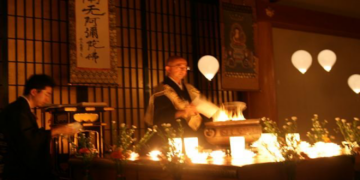
Ven. Zinai (Taiwan) was ordained in 1983 by the renowned bhiksuni Master Wuyin and Venerable Xinzi. Her work focuses on integrated Buddhist Abhidhamma studies, mindfulness meditation practice, creative education method based on Image Theory, and Satir’s Family Therapy Model.
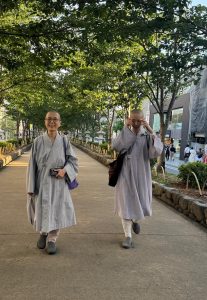
Ven. Zinai (left) with sister Ven. Jenguan

This study tour to Japan gave me the opportunity to engage directly with contemporary practices of Socially Engaged Buddhism in Japanese society, particularly with how the Buddhist community is responding to major social issues such as suicide, loneliness, and social isolation. Through visits with Rev. Soin Fujio, Rev. Ittetsu Nemoto, and Rev. Ryogo Takemoto, I witnessed new directions in how Japanese Buddhism responds to social suffering, and was also prompted to reconsider the role and mission of religion in modern society.

For a long time, Japanese Buddhism has often been criticized as “Funeral Buddhism” (葬式仏教 soshiki bukkyo), its main function centered on funerals, memorial services, and ancestor veneration. But in the face of an aging population, a declining birthrate, the phenomenon of social withdrawal (hikikomori), and the problem of suicide, some Buddhist practitioners in Japan have begun to reinterpret Buddhism’s social responsibility. They no longer see temples merely as places that serve the deceased, but are actively working to make them important spaces for accompanying the living, responding to suffering, and fostering social connection.


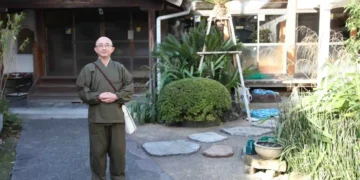
Rev. Soin Fujio (Rinzai Zen) in Yokosuka & Kamakura

Studying with Rev. Soin Fujio, I deeply felt how the compassionate spirit of Buddhism can be expressed through public engagement. Rev. Fujio has long collaborated with local government and interdenominational Buddhist organizations, devoting himself to suicide prevention and community mental health work. The meditation courses he offers are not only religious practice but also a form of companionship and support. During the Covid pandemic, he continued to care for participants through online courses. This showed me that Buddhism can be not merely a provider of religious ritual, but an important resource for people facing anxiety, loneliness, and unease.
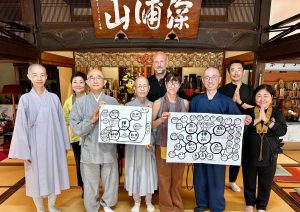
What struck me most was how the surrounding elements of our conversations—what might elsewhere feel like mere teaching or exchange—slowed down and filled with life and meaning, such as: the long history held in his bodhisattva statues, the arrangement of the garden and the main buddha image, the wooden floors, even the warmth of the tea. In my time with Rev. Fujio, these small, piece-by-piece experiences became vivid, and full of joy and meaning. I found myself wondering: if a person carrying a depressed mood were to enter this same slow, flowing atmosphere, might their sorrow begin to ease, even just a little?

Rev. Ittetsu Nemoto (Rinzai Zen) in Gifu

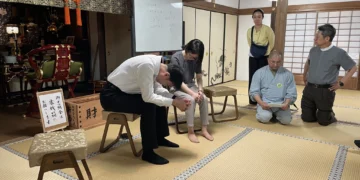
Rev. Ittetsu Nemoto’s work left an even deeper impression on me. For many years, he has accompanied people in suicidal crisis through e-mails, late-night phone calls, and gatherings, as well as his well-known death workshop called The Departure (旅だち tabidachi). Taking part in this workshop was the first time I confronted the subject of death so directly, and with the support of others around me. In modern society, death is often treated as taboo, something people avoid discussing—and in avoiding it, they also lose the opportunity to understand the finite nature of life. By guiding participants through a simulated experience of life’s end, Rev. Nemoto transforms death from merely a source of fear into an important occasion for rediscovering the value of life.
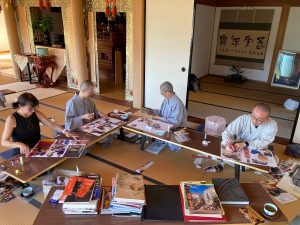
working on Vision Boards

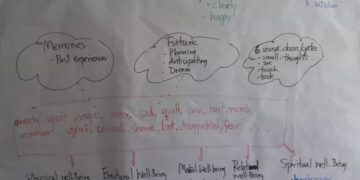
In addition, my experience of developing a Vision Board reflecting on my life gave me some insight into the meaning of reflection itself: that it is a present, ongoing, and self-constructed process, one very much like the way we come to see our own experience. Through this art-based process, verbal activity gave way, and feeling and emotion became more free to arise and enter into dialogue with myself. From this experience, I found that certain new discoveries about my past tended to draw me further into my own inner world and made me less preoccupied with the external one. It also gave me a renewed sense of strength in valuing my past experience.

This experience gave me a deep appreciation that suicide prevention is not only about stopping someone from ending their life, but also about helping people rediscover a reason to keep living. Often, what people are truly confronting is not death itself, but loneliness, despair, and disconnection from others. When someone once again feels understood, accepted, and accompanied, life can begin to rekindle hope.

Sotto, the Kyoto Self-Death & Suicide Counseling Center

After visiting Revs. Ryogo Takemoto and Kazuha Fujii in Kyoto and learning about the work of the Sotto counseling center, founded in 2010, I came to a further appreciation of the importance of listening. Sotto does not rush to offer answers or solutions, but instead creates a safe space where suffering individuals are allowed to hold their emotional pain and, in time, find the courage to tell their own stories. This model of accompaniment reminded me that the compassion emphasized in Buddhism is not something bestowed from above, but a willingness to acknowledge and accept another’s suffering and bear it together with them. This kind of bare acceptance carries tremendous power. It allows a person to recognize that it is permissible to simply be with sorrow or despair, and to learn how to remain present with these painful feelings without denying or suppressing them.

It is also worth noting a shift in terminology that reflects this same concern for those who remain. The Japanese term 自殺 (ji-satsu, “self-killing”) frames the act as a person killing themselves, carrying connotations of a criminal act. To reduce this accusatory nuance, Japanese media and textbooks began, from around the 1990s onward, to adopt the term 自死 (ji-shi, “self-death”) instead. This change in language was called for by bereaved family members themselves, and it illustrates that the pain of those left behind is itself something that continues to require care and attention.

I was also deeply impressed by the innovative model of Tera Energy, co-founded in 2018 by Rev. Takemoto. By supporting social welfare and public-interest activities through a renewable energy business, the temple becomes more than a religious site; it becomes a platform for driving social innovation and sustainable development. This model shows that Buddhism can respond not only to individual psychological suffering, but can also participate in structural social reform.
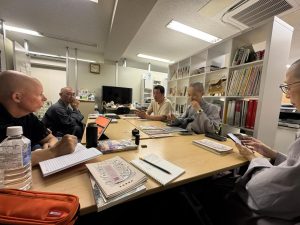
Study meeting at the Sotto Office

Conclusion

One of the most important takeaways from this study tour was a renewed understanding that the Buddhist concepts of dependent origination and interdependent coexistence are not abstract philosophy, but concrete social practice. Much research indicates that suicide and psychological distress are closely linked to social isolation. The Buddhist practitioners I met in Japan are responding to these issues precisely by building relationships, rebuilding community, and restoring connection. They remind us that healing loneliness is not the responsibility of the medical system alone, but a shared task for society as a whole.

Reflecting on Taiwan’s current situation, I believe the experience in Japan offers many lessons worth drawing on. As the population ages, family structures change, and mental health needs increase, religious organizations may be able to play a more active role, becoming important partners in community care, grief counseling, and life education. If temples, churches, and other religious organizations can draw on the trust and community networks they have built over the long term, they may have the opportunity to become an important support system for public mental health.

This study tour not only allowed me to see innovative practices through which Japanese Buddhism responds to social problems, but also prompted me to rethink the meaning of religion’s existence. The value of Buddhism should not remain confined to scriptures and rituals, but should be realized in response to the suffering of life. True compassion is not only chanting sutras for the deceased, but being willing to accompany others through the darkness in their loneliest, most vulnerable moments.

Going forward, I hope to bring what I have learned from this study tour back to my own community and workplace, and to further explore how to combine religious wisdom, mental health, and social practice to build a more inclusive and supportive network of care. Through these efforts, I believe that the spirit of compassion and interdependence advocated by Buddhism can demonstrate a deeper and more concrete influence in contemporary society.

Future Action Plan and Knowledge Dissemination, for example:

  • Holding 2–3 sharing lectures
  • Writing a study report or journal article
  • Promoting cross-disciplinary dialogue between Buddhism and mental health
  • Establishing a Taiwan–Japan exchange network for socially engaged Buddhism
  • Developing a localized, Taiwan-based model of Buddhist life care

This will better demonstrate the concrete social benefits and follow-on impact.

Advertisement Banner
Next Post

How Can I Help? Reflections on Japanese Buddhist Approaches to Suicide Prevention

Learning to Stay with Suffering: Reflections on the Suicide Prevention Workshops in Japan

Suicide Prevention Tour Report Japan 2026


Navigate

  • Events Calendar for 2026
  • About Us
  • Project Sites
  • Online Course
  • Seminars & Resources
  • Resource Persons

Tags

Death Workshop Joan Halifax Rinzai Zen Monk Wongsanit Ashram

About Us

The INEB Institute for Buddhist Chaplaincy (IBCC) is a cooperative, network organization that supports Buddhist chaplaincy training programs in Southeast and South Asia

  • About
  • Advertise
  • Privacy & Policy
  • Contact

© 2025 IBCC

No Result
View All Result
  • Events Calendar for 2026
  • About Us
  • Project Sites
  • Online Course
  • Seminars & Resources
  • Resource Persons

© 2025 IBCC