




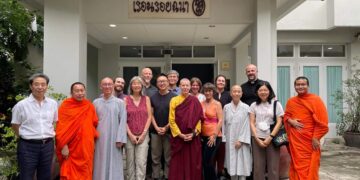

Ven. Jian Guang was ordained in 2004 by Bhikshuni Master Wu Yin, founder of the Luminary International Buddhist Society, a Taiwan-based Mahayana Buddhist community. She teaches Buddhist studies and develops educational programs for lay practitioners, with a particular interest in making Buddhist teachings relevant to contemporary life. She holds an MDiv from Naropa University and works to bridge inner practice and social care through the Dharma.
As I sat at my desk trying to tease out the main points of my learning, I realized that even two months after the trip, I still could not quite put into words what I had experienced or how deeply it had affected me. I could describe what I saw and heard, but something about the experience itself seemed to resist being easily translated into words. It felt as though something deeper was still emerging, with layers and layers continuing to unfold.
Perhaps this is because the trip was not simply an intellectual experience for me. It was an encounter. I went to Japan thinking that I would learn more about what Buddhism can do in response to contemporary suffering. But I came back asking a different question: How does Buddhism meet a person in suffering? Especially when we are facing people struggling with grief, loneliness, isolation, and suicidal thoughts. I realized that this question has already begun to change the way I meet people.
At a recent appointment with a lay student from my Buddhist class, he expressed frustration about having wandering thoughts all the time while chanting Amida Buddha’s name as his daily practice. My usual response would have been to tell him that this is normal and that he should not be discouraged. I would probably then explain the Buddhist teaching about the elusive nature of the mind and how cultivating awareness in the present moment can help us recognize habitual patterns. I might also guide him to connect with the image of Amida Buddha and use his fingers to count while chanting in a more practical way.
But then I was reminded of Rev. Fujio’s ground yourself first and deep listening, Rev. Nemoto’s spontaneity and being there with one’s whole self, and the Sotto priests’ warmth through the embrace of Amida Buddha. So, instead of trying to fix the problem or immediately help him find a way out, I stayed with him and asked, “Could you tell me more about that frustration?” Something shifted in me. I feel that I am going through some kind of transformation, learning to meet the human condition through a different entry point.
This shift has also made the writing itself challenging. I am much more accustomed to approaching Buddhism through my intellectual mind—to analyze, understand, organize, and explain. Yet when I try to articulate what moved me during this trip, I find that I have to shift from an intellectual mode into a more feeling-oriented mode. I have to return to what I sensed, what touched me, and how I experienced the people I encountered. Perhaps this is part of what the trip itself taught me.
Meeting Buddhism in a Different Way
Coming from Taiwan, I was familiar with Buddhism in many forms. Yet some of what I encountered in Japan surprised me—in a good way. I saw a generation of Buddhist priests and communities networking with one another and trying to move Japanese Buddhism toward a more socially engaged form. They were finding ways to reach people in the realities of their everyday lives, rather than meeting people primarily at funerals.
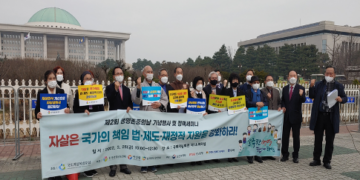
In addressing the issue of suicide, they have also tried to shift the language from self-murder 自殺 (ji-satsu) to self-death 自死 (ji-shi), challenging negative views of suicide and contributing to its destigmatization. Their efforts have also gained recognition from the public sector and brought Buddhism into forms of public service. This emerging stream of Buddhism felt refreshingly tender and caring to me. It may be reshaping the traditional image of Buddhism as solemn, otherworldly, or even hierarchical.
But what struck me most was something deeper. These Buddhist endeavors to engage society do not begin by giving people Buddhism. Nor are they simply providing charity. Instead, they begin by going to where people already are in their vulnerabilities. They do not necessarily begin by explaining Buddhist teachings. Rather, they embody something of Buddhist compassion through the way they show up, listen, respond, and remain present. I saw this in three seemingly different expressions.
Rev. Soin Fujio: Ground Yourself First
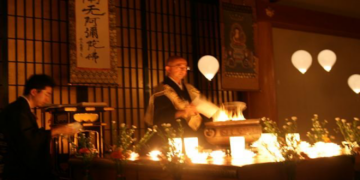
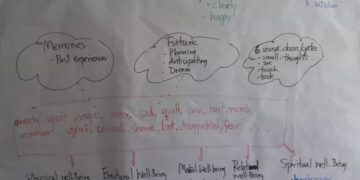
Rev. Fujio begins with grounding oneself through settling the body, the breath, and the mind in four kinds of postures. He illustrated these practices on a poster using artistic brush writing, giving them a more heartfelt feel. Before anything else, he meets people where they are through attunement. His deep listening and attention to non-verbal language allow him to gather information about the person in front of him and help them become centered.
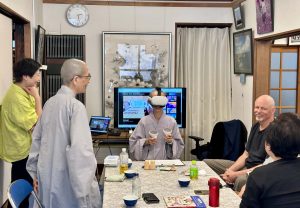
I was also struck by his two very different means of accompanying people. On the one hand, he developed an innovative virtual temple project where young people could gather online; on the other hand, he maintained the more traditional, almost nostalgic practice of counseling suicidal people through letters as part of the Association of Buddhist Priests Confronting Self-death and Suicide.
Rev. Nemoto: Be There with One’s Whole Self
Rev. Nemoto is naturally curious about people. He seems to begin by sensing what is happening in another person and responding with remarkable intuition and creativity. There is a playfulness and fluidity in his way of being that creates space for people to engage without feeling that they are being given a predetermined answer. At the same time, there is a directness that can bring surprising clarity.
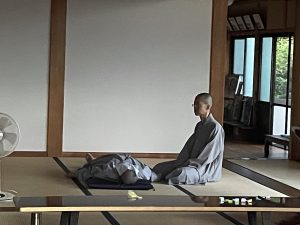
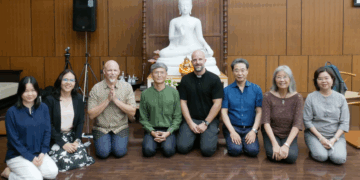
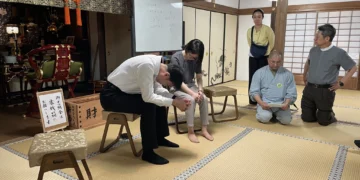
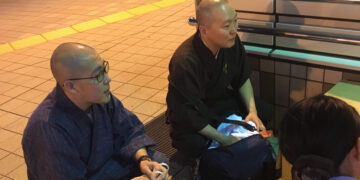
There were many elements in the death workshop called The Departure (旅だち tabidachi) that I would like to continue exploring. For example, on the third day of our study tour in Japan, Rev. Nemoto drove to our hotel early in the morning to pick up the six of us. Along the way, we stopped at a large supermarket to buy our individual lunches. He gave us a little assignment: as we chose our food, he asked us to think about what we would most want to eat as our last meal before we die. Later at the temple, we shared each other’s food in a kind of Buddhist last supper.
He asked the question so casually as we stood in a circle. Without any expectation or preparation on our part, he brought us straight into the subject of death. There was a strange feeling of, “Wait, are we really going to face death like this? Is death really a topic as ordinary as going to the supermarket to buy groceries?” From now on, perhaps this is a question I can think about whenever I go grocery shopping.
Sotto: Resonate with Feelings
Sotto—literally suggesting “sitting gently by your side”—could hardly be more gentle. The Sotto priests’ work begins by entering and resonating with people’s emotional world: grief, loneliness, confusion, and even the awkwardness and difficulty surrounding suicide. Rev. Takemoto explained, “Our approach is not to fix the person’s isolation, but to ‘feel’ the person’s isolation.” In the complete acceptance of feelings as they are, people can feel unconditionally understood.
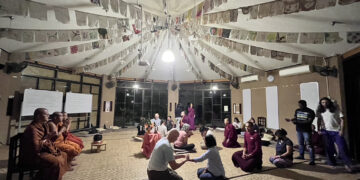
Sotto also provides spaces for people to connect and share their experiences with death and dying through shared human experiences and gatherings, such as Death Cafés, Oden no Kai, and Sotto no Engawa. These activities held regularly are so thoughtful and full of caring and sincere companionship.
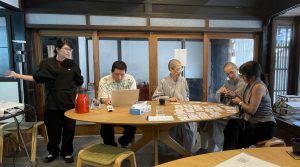
Encountering these approaches also made me realize how difficult it is to imagine just how dark a person’s inner world may become when they reach the point of wanting to die. Perhaps before we can respond to suffering, we first need the willingness to enter that darkness—not to solve it immediately, but to be willing to stay near it.
Entering Through Feelings
From my perspective, all three encounters seem to enter through feelings and work with feelings to build a connection with the person in need of help. Rather than trying to change the way a person is suffering, they accompany the person through suffering. They come across as very present and deeply embodied. There is an openness to whatever arises, and an acceptance of people just as they are. That is inspiring to me.
Although Rev. Fujio, Rev. Nemoto, and Sotto look distinct from one another, I began to see them as three different expressions of one question: How can Buddhism meet people where they actually are? Or, more simply: How can we be with people in their suffering? This question has become a spiritual question for me as a Buddhist monastic: When someone is suffering, what does it mean for me to help?
Bringing Buddhism to Where People Are
This takes me somewhere quite different from conventional Buddhist propagation. Rather than primarily bringing people toward Buddhism, these approaches seem to bring Buddhism toward where people already are. I began to wonder whether there is a subtle but important difference between offering Buddhism to people and allowing Buddhism to enter the places where people are already suffering.
Most people are probably not asking, “I need Buddhism. Please give me Buddhism.” Instead, what they may really be saying is: “I am suffering. Can you stay with me?” Contemporary forms of suffering are challenging Buddhism to reconsider how it becomes present and relevant in people’s lives.
This has led me to think about three layers of how Buddhism might show up in contemporary society: Buddhism as Teaching, Buddhism as Care, and Buddhism as Presence.
- Buddhism as Teaching
This is the world I already know well. Buddhism offers teachings, practices, rituals, education, and frameworks for understanding suffering. These remain essential. They give people language, wisdom, and practices with which to navigate life. I do not think this layer should be replaced.
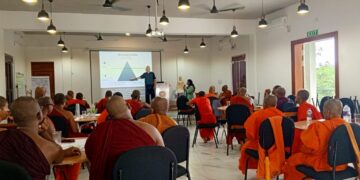
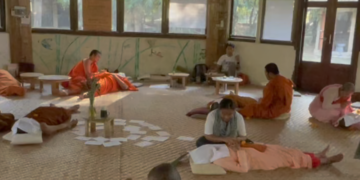
It is a beautiful coincidence that during my visit to Japan, my sangha back in Taiwan held a two-day intensive training for monastics on End-of-Life Care and Services. The training introduced participants to the procedures and rituals involved in Buddhist services for the deceased, while strengthening their practical skills in chanting, the use of ritual instruments, and guiding ceremonies on site. In addition, participants learned how to support family members emotionally and offer teachings appropriate to their circumstances. The senior nuns shared their knowledge and techniques, allowing participants to deepen their learning from both theoretical and practical perspectives.
It is emphasized that when participating in services for the deceased, monastics should not only embody reverence and dignity through their conduct, but also hold the liberation and well-being of sentient beings as their guiding intention. They are called to help the deceased pass on with peace of mind while also accompanying family members in finding stability and peace amid grief. In this way, Buddhist end-of-life care can move toward the aspiration of “peace for the living and peace for the departed.”
I regret that I had to miss this training with my community. For me, this is a reminder that traditional Buddhist training remains fundamental. In fact, society today has seen an increasing demand for Buddhist services for the deceased. In many cases, it is when people experience the loss of a loved one that they step through the temple door and begin their journey of seeking answers to life’s questions.
But perhaps it is not the only way Buddhism can meet people. The question, then, is not whether traditional Buddhist teaching and ritual should remain, but how they can become a meaningful way of meeting people in their suffering.
- Buddhism as Care
I pursued a Master of Divinity degree in the United States, so the world of chaplaincy is not unfamiliar to me. One reason I became so interested in chaplaincy is that it feels deeply congruent with Buddhist practices. I find it fascinating that Buddhist teachings can speak through spiritual care. But turning these insights into a working system in a specific context where I belong is a process I am still navigating.
My experience in Japan showed me another possibility. Buddhism can become a way of accompanying someone through suffering without requiring that person to first identify as Buddhist or accept Buddhist teachings. Instead, one enters through people’s lived experience rather than asking people to enter through Buddhism first. Here, Buddhism is not necessarily something we explain. It becomes something we practice through caring for another person.
- Buddhism as Presence
And perhaps this is the deepest layer of what I encountered. I was struck not only by what the Japanese priests did, but by how they were. The word embodied keeps coming back to me as I try to describe this experience. Their Buddhist understanding seemed to be expressed not only through their words or programs, but through their presence—the way they entered a room, related to people, sensed what was needed, and stayed with suffering.
Perhaps this presence is rooted in letting go of the self and in embodying a willingness not to know. This creates space for authentic connection to arise. Their counseling approaches are original in the sense that they grow out of Buddhist practices and philosophy, but they do not always look traditionally “Buddhist” on the surface. This, to me, is one of the most intriguing things I encountered in Japan.
What I Am Taking Home
Perhaps my strongest learning from this trip is that the contemporary relevance of Buddhism may not depend only on what Buddhists say, but on how Buddhism becomes embodied in the way we meet another person’s suffering. Buddhism has existed for thousands of years. It has always been there in ordinary people’s living and dying. But perhaps it comes alive in a true encounter.
And perhaps this is why, even two months later, I am still trying to find the words. The trip gave me many things to think about. But more than that, it gave me something to continue feeling into. I am still learning how to move from knowing about suffering to being willing to stay with suffering.
How can I help?
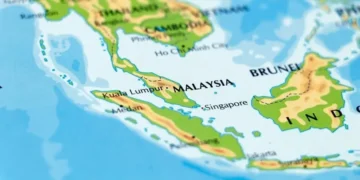
At the end of this reflection, I find myself wondering what it might look like for Buddhist communities in Taiwan, Thailand, Sri Lanka, India, or elsewhere to respond to contemporary suffering in their own cultural contexts.
And as a female monastic, I am also interested in hearing more female voices and exploring how female clergy might contribute to this process in their own ways.
For local integration, I think the most fundamental place to begin is with the training and education of monastics—helping them become aware of different ways of bringing Buddhism into people’s lives and of meeting people where they are.